Introduction: India, Self-Employment & Why It Matters for Students
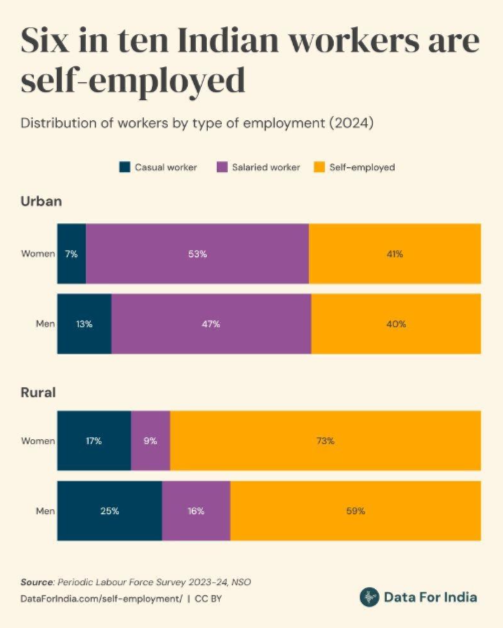
Did you know that over half of India’s workforce is self-employed?
According to labour data, more than 55% of the Indian workforce works on their own account or
runs small independent enterprises, while around 22 % are casual workers and only about 21.5 % are formal
salaried employees. (Trading Economics)
In rural India, close to 60%+ workers are self-employed, especially in agriculture and micro enterprises, while in urban areas nearly 40–45% are independent workers. (CEDA »)
This explains why self-employment isn’t just a fallback — it’s the largest section of India’s working population.
📊 What this means for your child
As traditional salaried jobs stagnate and education fails to guarantee
employment alone, more Indian youth are choosing to create their own work — by designing services, scaling ventures, serving their
communities, or building online brands.
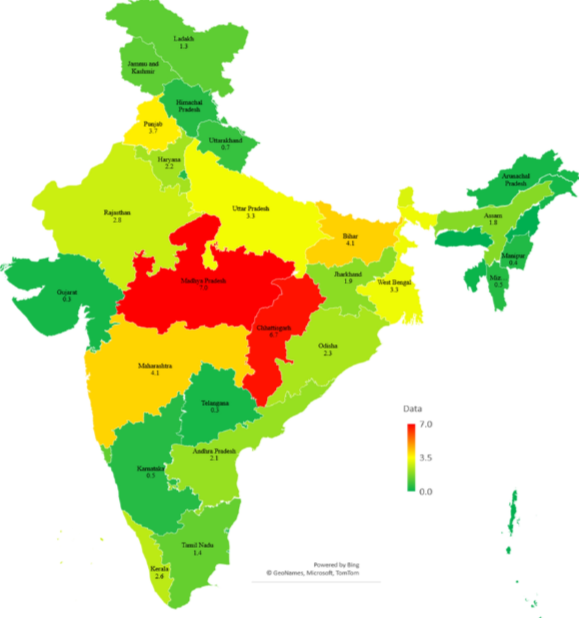
Map: Self-Employment Landscape Across Indian States
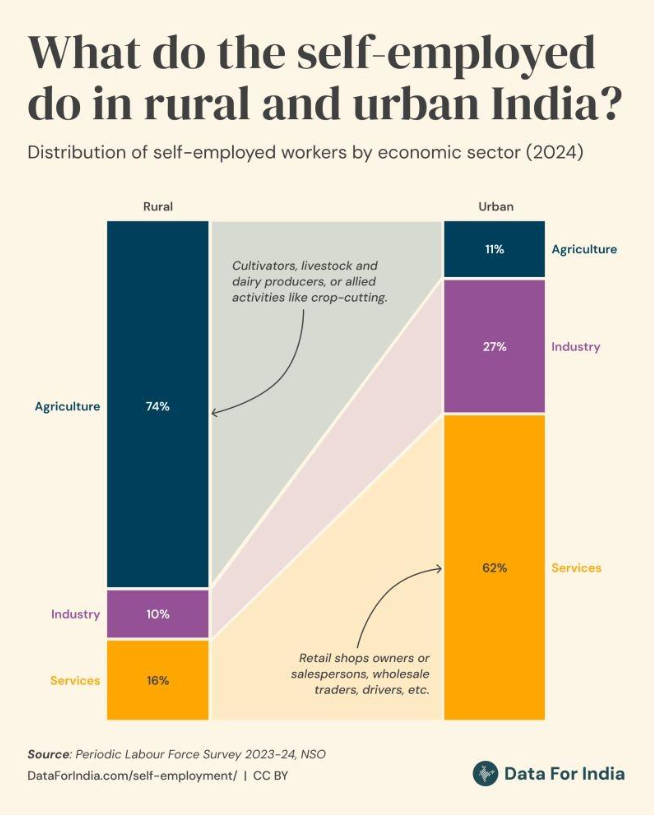
Key insights from national employment data:
- Rural states like Uttar Pradesh and Bihar show higher self-employment shares due to agriculture & small enterprises. (Data For India)
- More industrialised states like Tamil Nadu and Kerala have lower self-employment and higher wage employment. (Data For India)
This variation matters because services, crafts, digital work and enterprise opportunities differ by region.
Why Self-Employment Is Becoming a Career Option
🔹 Traditional Jobs Are Not Growing Fast
In India, even as GDP grows, formal job creation hasn’t kept pace with youth entering the
workforce — leading to underemployment, informality, and stalled
aspirational careers.
While unemployment rates fluctuate around ~5 %, many graduates struggle
to find jobs matching their skills or aspirations. (Reuters)
🔹 Gig & Freelance Work Is Growing
India’s gig economy — project-based and flexible work — is fast rising, with estimates suggesting over 2.35 crore freelancers by 2029–30. (Wikipedia)
Yet, income levels show challenges: about 40% of gig workers earn below ₹15,000 per month, indicating that self-employment needs planning and capability, not just choice. (The Economic Times)
Two Important Realities for Indian Families
- Self-employment is already the largest employment category, not a fringe choice. (LinkedIn)
- Most self-employment today is low productivity, informal, and necessity-driven. But with skills, strategy, and guidance, it can become income-generating, scalable, and rewarding.
This is where structured career guidance and early identification of entrepreneurial potential becomes key — especially for young minds figuring out their path.
4 Entrepreneur Types: Can Your Child Thrive in Any?
Each student has unique strengths — and India’s evolving economy welcomes multiple pathways.
- Solopreneur / Freelancer
Who they are:
Independent, skilled, and self-directed workers who sell services based
on their expertise.
Key traits:
Self-disciplined, adaptable, hands-on skills.
Examples:
Designers, writers, coders, tutors, consultants.
Why it fits today:
India’s digital ecosystem and platforms enable students to start
freelancing even before graduation.
Future potential:
- India’s freelancing market projected to grow dramatically by 2029–30. (Wikipedia)
- Startup Founder
Who they are:
Ambitious innovators who build scalable solutions to real
problems.
Key traits:
Vision, leadership, resilience.
Examples:
Tech startups, SaaS products, fintech platforms, biotech
ventures.
Why it fits today:
India’s startup ecosystem has strong government backing (Startup
India schemes, seed funds), venture capital, and global market
links.
Government support example:
Startup India offers seed funding, mentoring & commercialization
assistance. (Startup India)
- Social Entrepreneur
Who they are:
Purpose-driven, community-focused problem solvers.
Key traits:
Empathy, mission-driven execution, community-building.
Examples:
Sustainability ventures, edu-tech initiatives, NGOs with
enterprise models.
Why it fits today:
Social entrepreneurship turns passion into income — and
India’s development priorities (skills, healthcare, rural
innovation) create many entry points.
- Digital Creator / Content Entrepreneur

Who they are:
Creative, expressive, and digitally savvy builders of online audience
communities.
Key traits:
Creativity, communication, authenticity.
Examples:
YouTubers, podcasters, influencers, online educators.
Why it fits today:
India’s democratizing internet — affordable data +
platforms like YouTube/TikTok — means creators can turn attention
into income.
Emerging support:
Policies and training labs now recognise the creative economy as part of India’s future workforce.
Parents & Students: How to Choose the Right Path
At the International Career Guidance Academy, we help families identify a student’s entrepreneurial potential early — so they can:
- Choose education paths that support chosen entrepreneur type
- Select internships aligned to real skills
- Build portfolios that convert into income opportunities
- Avoid common pitfalls like skills mismatch or low earning
For example:
- A student strong in communication and design may become a content entrepreneur before college.
- A tech student with problem-solving bent may work toward startup leadership.
- Students deeper into social impact find meaningful pathways in community ventures.
Each path requires different career decisions, and the earlier a student matches passion with competencies, the better the outcomes in employment or self-employment.
Checklist for Parents & Students
✔ Understand that most Indians don’t work in salaried jobs anymore — they
create work. (Data For India)
✔ Explore if your child’s interests align with any of
the four entrepreneur types.
✔ Early internships and skill assessments help predict future
success.
✔ Government schemes (like PM Internship Scheme) can be leveraged for experience. (Wikipedia)
At the International Career Guidance Academy, we help students and parents make informed, confident career decisions — especially at the most critical stages:
✔ After Class 10
✔ After Class 12
✔ During college and early career years
What We Help You Understand — Clearly and Scientifically
1️⃣ Which stream and subjects should you choose — and WHY
We go beyond marks and trends to answer:
- Science, Commerce, Arts — what truly fits this student?
- Which subject combinations support future careers?
- What are the long-term implications of each choice?
Connect With Us
📞 Call : 7349662320 / 7349662321
🌐 Website:👉 https://internationalcareerguidance.com/
Full URLs for Self-Employment Data
- Self-employment share ~55–60%: https://www.dataforindia.com/self-employment/ (Data For India)
- Self-employment distribution rural/urban: https://ceda.ashoka.edu.in/how-does-labour-force-participation-vary-across-indian-states/ (CEDA »)
- Freelancing growth projection: https://en.wikipedia.org/wiki/Freelancing_in_India (Wikipedia)
- India employment overview: https://en.wikipedia.org/wiki/Economy_of_India (Wikipedia)